Workshop 01
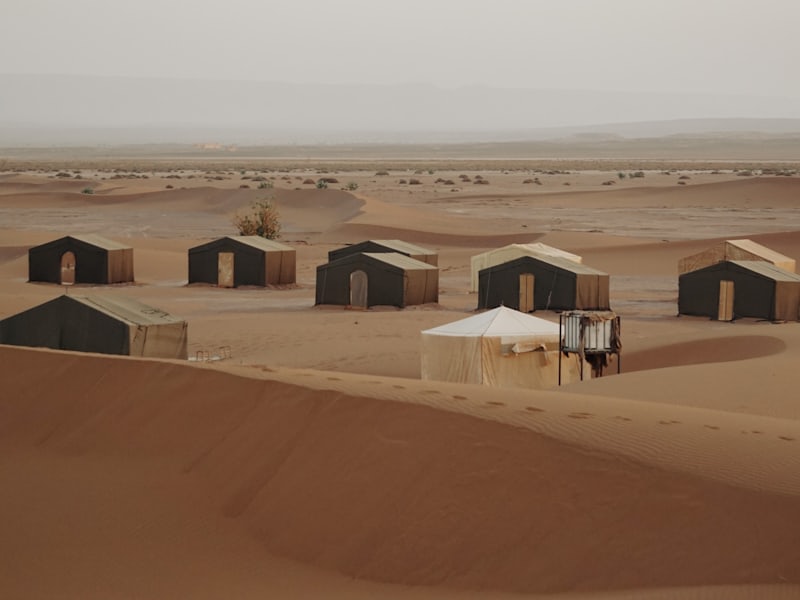
Bedouin fire cooking with children
Three hours at the Abu Hashem family camp: bread on hot stones, slow lamb in the sand pit, tea over a juniper-wood fire. Children participate at every stage.
Read the workshop file →Everything the cooperative currently publishes for visiting families. Each trail has its own detailed file (the seven public files below plus the Wadi Rayan canyon file in print only); each workshop runs on a fixed schedule from November to April; the conservation programme is open to families who walk the Wadi El-Hitan trail and would like to contribute observations to the fossil-monitoring database.
| Trail | Distance | Min age | Best months | Difficulty | Camp? |
|---|---|---|---|---|---|
| Wadi El-Hitan boardwalk | 2.4 km loop | Toddler | Nov–Mar | Easy · pushchair-friendly | Day |
| Lake Qarun shoreline circuit | 12 km / 4 hr | 3 | Nov–Feb | Easy | Day |
| Tunis pottery loop | 8 km / 3 hr | 5 | All year except Jul–Aug | Easy | Day |
| Wadi Rayan canyon walk | 14 km / 5 hr | 7 | Oct–Apr | Moderate | Day |
| White Desert overnight | 2 days / 1 night | 6 | Nov–Mar | Moderate | 1 night |
| Wadi Hitan + Rayan combined | 3 days / 2 nights | 8 | Nov–Feb | Moderate | 2 nights |
| Bahariya extension trek | 4 days / 3 nights | 10 | Nov–Feb | Demanding (still family-rated) | 3 nights |
| Tunis riverbank slow walk | 4 km / 1.5 hr | 2 | All year, mornings only Jun–Sep | Easy · stroller-friendly | Day |
Each trail has its own file — the seven linked above are public on this site; the other three (Wadi Rayan canyon, Wadi Hitan + Rayan combined, and the Bahariya extension) are members-only because they involve specific landowner negotiations that we keep off the open web. Members receive the printed three-file pack in November and March; non-members can request a single file by email and we will send it within five working days.
Four programmes run at the cooperative's family camps from November through April. Workshops are limited to two or three families at a time to keep the experience genuinely participatory, are led by member-family parents, and are intended to be done either as a stand-alone afternoon or as an addition to one of the trail itineraries.
Three hours at the Abu Hashem family camp: bread on hot stones, slow lamb in the sand pit, tea over a juniper-wood fire. Children participate at every stage.
Read the workshop file →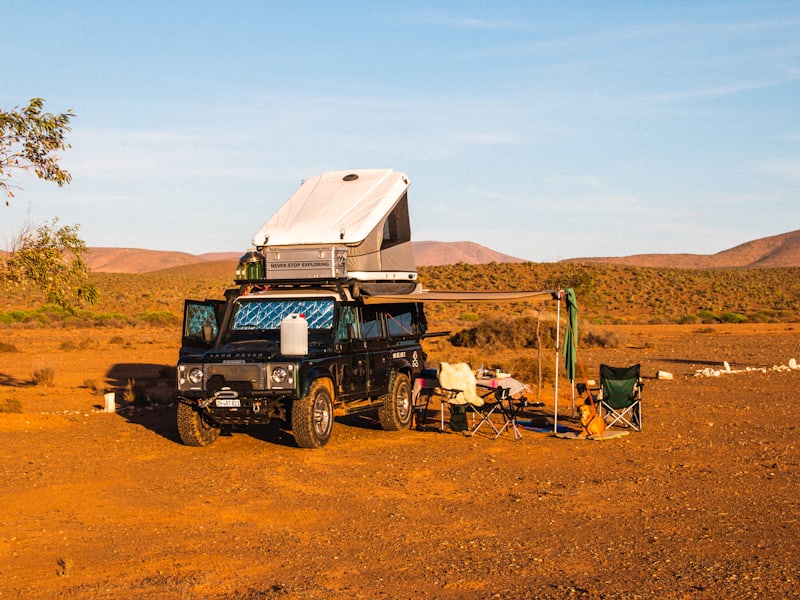
Two-hour evening session with the cooperative's eight-inch reflector telescope. The Tayel family runs this from October to April when the moon allows.
Read the workshop file →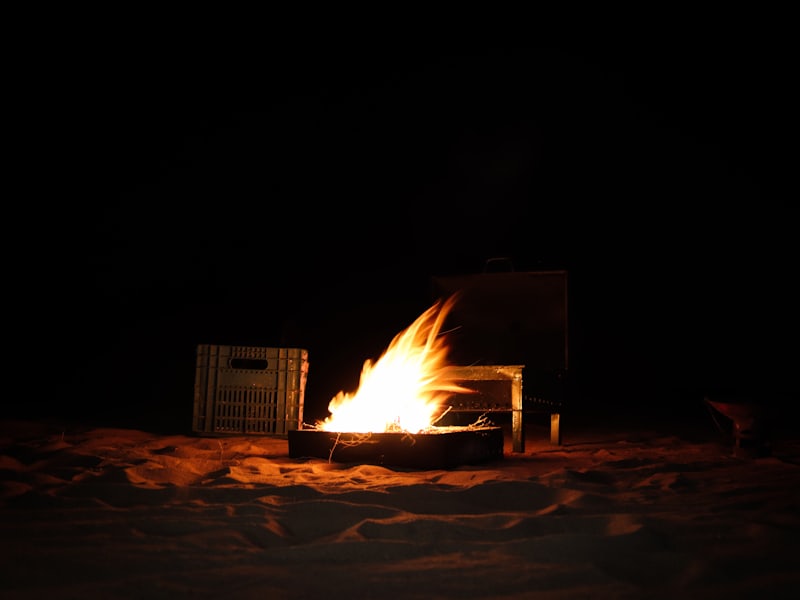
At the Issawi family's neighbour's kiln in Tunis Village. Children try the wheel; parents glaze. Pieces are fired in the next firing cycle and shipped to your home address.
Read the workshop file →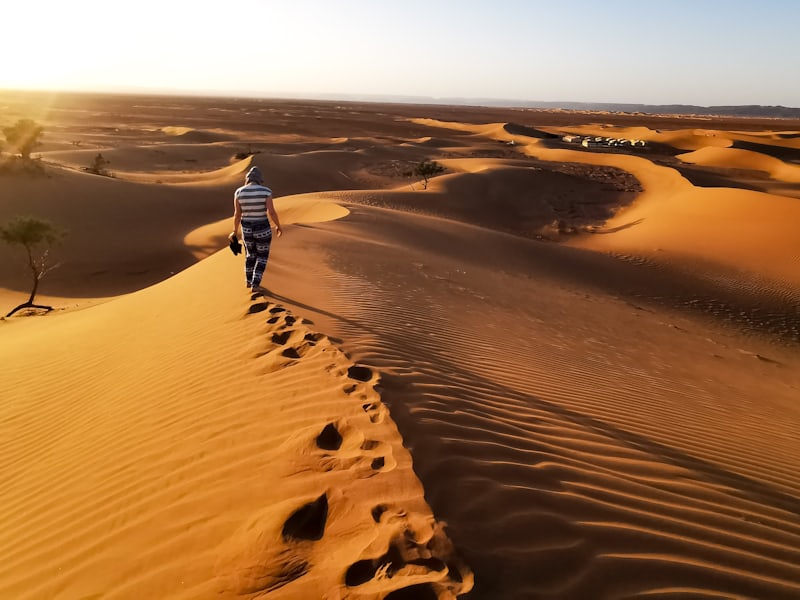
Two-hour afternoon at Wadi El-Hitan with the cooperative's conservation team. Families log fossil-condition observations into the Wildlife Trust database. Suitable from age eight.
Read the trail and workshop →The cooperative has run a citizen-science fossil-monitoring programme at Wadi El-Hitan since 2014 under a memorandum of understanding with the Egyptian Wildlife Trust and the Wadi El-Hitan UNESCO site management. The programme is straightforward: families who walk the Whale Valley trail with us are invited to spend two extra hours after the standard walk, with a member-family lead, recording fossil condition (twelve numbered fossils visible from the boardwalk) into a structured observation form. The form goes into the Wildlife Trust database and informs the site's annual erosion-and-vandalism report. Families that participate receive a printed certificate and their name (with consent) appears in the annual contributors page of the cooperative's December update.
The programme has logged six hundred and twelve family observations across eleven years, contributing roughly forty percent of the citizen-science records in the site's database. The Wildlife Trust grant that funds the programme is recurring and covers the cooperative's lead-family time, the printed forms and the database submission costs. No part of the grant is paid to participating visiting families; participation is a contribution, not a paid role.
The cooperative publishes its working methodology openly. The document describes how a new trail is proposed by a member family, how the two-parent scout is conducted, how the family walk with own children is recorded, how the seasonal recheck is timed and what it covers, how a published trail is updated when conditions change, what the age-rating numbers actually mean (we tested every recommended age in the rating, not an industry default), the cooperative's water-consumption calculations per child and per adult per kilometre, the toilet logistics that the Saad family maintains, the emergency-protocol structure, and the appeals route for a visiting family that believes an error in a trail file has compromised their walk. The current version is dated March 2026 and is downloadable from this page in PDF and plain-text formats.
Three changes were made to the catalogue in the past twelve months. The Tunis pottery loop was extended by 1.2 kilometres to include a new section along the lake's southern reed bed; this was added after a member-family proposal at the May 2025 board meeting and re-walked in October. The Bahariya extension trek raised its minimum age from nine to ten following two reports from visiting families that the third night's camp was harder than the file had described; the file was rewritten accordingly. The Wadi Rayan canyon walk had its November-to-April window narrowed to October-to-April after the 2024 spring proved warmer than the original file assumed; the rewrite landed in the December 2025 update.
Yes — most visiting families combine two day-trails with one overnight, typically the Whale Valley boardwalk, the Tunis pottery loop and the White Desert overnight. The cooperative can sequence the three over five days from Cairo and back. Write at the contact form and mark which trails you would like.
The Wadi El-Hitan boardwalk is wheelchair-accessible for the first 800 metres on a packed-sand surface. The Tunis riverbank slow walk is wheelchair-accessible for the full 4 km on a paved corniche path. The other six trails are not wheelchair-accessible; the terrain is desert sand, rock and uneven footing.
We host school groups twice a year, once in the autumn and once in the spring, through arrangement with the cooperating school's teacher coordinator. The schedule is fixed eight months in advance; school groups have priority on the Whale Valley citizen-science programme and on the Issawi family's spring agricultural walk. Write to the desk with school-group enquiries marked clearly.
For overnight trails (White Desert, Wadi Hitan + Rayan combined, Bahariya extension), the cooperative provides tents, sleeping mats, ground sheets, communal mess gear and cooking fire. Families bring their own sleeping bags rated to nine degrees Celsius, personal items, and any specific food preferences not on the standard menu. The kit list is in the kids' trail essentials file.
The cooperative routes the booking to another member family with the right terrain experience, with the visiting family's consent. If no member family is available — for instance, during the Eid al-Adha family week when all members are with their own families — the cooperative declines the booking rather than substitute an external guide.
No. The cooperative does not sell to or through commercial tour operators. We work only with families approaching the cooperative directly. We do welcome editorial enquiries from journalists and travel writers; the press protocol is described in the methodology document.
Yes — two. The original 2009 Lake Qarun northern shore trail was removed in 2014 because the development of the northern shore made the route no longer pleasant for walking; the file is archived but not republished. The 2012 Wadi Hitan eastern approach was removed in 2017 after the access road changed; the cooperative chose not to rebuild the route under the new road alignment.
The November and March printed updates go out by post to members in Egypt, by email PDF to international members, and are stocked at the cooperative office for visiting families on arrival. The update is also published openly on this site from the second week of December and the second week of April respectively. Members get it three to four weeks earlier.
Any member family may propose a new trail at either of the two annual board meetings. The proposal must include a draft route, an initial water-and-toilet plan, a draft age rating, and a proposed scout schedule. The board votes whether to accept the proposal into the scout pipeline; an accepted proposal moves through the four-step scouting process described on the home page. The process from proposal to publication typically takes between fourteen and twenty-four months. Five proposals are currently in the pipeline at various stages; we expect one to enter the catalogue in November 2026 and another in March 2027.
Several member families do other work as desert guides, agricultural workers or village teachers; the cooperative does not require exclusivity. What we do require is that any work that could be confused with a cooperative trail — for instance, a private desert guide engagement for a family that found the guide through the cooperative — is declared at the board's half-year meeting and documented. This avoids the appearance of competition between the cooperative catalogue and a guide's private practice.
One family has left the cooperative in eighteen years, in 2016, when the family relocated to Alexandria for a child's medical reasons. The trails that family led — at the time, two — were re-walked by two other member families before being reassigned. No trail was removed from the catalogue because of the departure; the cooperative's structure assumes redundant capability for every trail. If a future member family leaves, the same approach applies: the trails are re-walked and reassigned without loss to the catalogue.
Yes — write to the desk with the specific request, your experience and the ages and experience of the children in your party. The cooperative occasionally arranges a more demanding variant of a catalogue trail for families with prior desert experience; this is done case by case and is not part of the published catalogue. The family-rating considerations remain unchanged; we do not push a trail past its family-rated limits even on request.
Disputes among member families are rare and are handled at the board level. Two structural disputes have occurred in eighteen years — one over the allocation of citizen-science grant work in 2019 and one over the use of the cooperative office for a family event in 2023. Both were resolved at the board meeting following the dispute with no lasting damage to the cooperative; both are mentioned in the relevant year's transparency note in the December update.
The cooperative has a memorandum of understanding with the Wildlife Trust covering the Wadi El-Hitan citizen-science programme and the annual reporting. The Wildlife Trust does not have editorial control over the cooperative's trail files; the Trust's grant covers the citizen-science work specifically and is detailed in the December financial transparency note. Comparable structural separation applies to the Fayoum Heritage Foundation relationship.
Tell us which trail or which combination, your travel dates, the number and ages of children in your party, and any specific requirements (diet, mobility, language preference). A member family replies within two working days with availability, the trail-fee quote and the next steps.